From Chibok to Ibadan. Nigeria’s epidemic of school kidnappings is slowly rewriting what childhood even means— and it feels like it could unspool a whole generation’s basic right to learn and live.
It was just another Thursday morning when the children of Esiele and Yawota communities, in Oriire Local Government Area of Oyo State picked up their bags and walked to school. Their teachers were already there, preparing lessons, calling registers going about the ordinary business of education. None of them could have guessed that May 15, 2026 would be the last normal morning, many of them would see for a long time—or maybe ever.
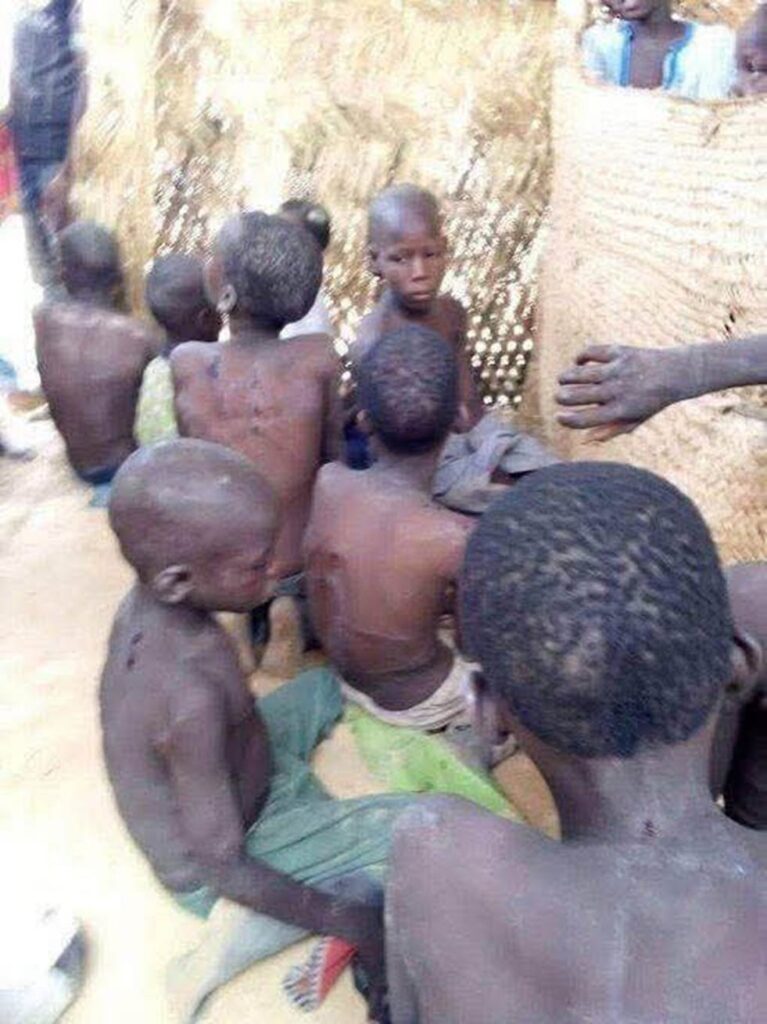
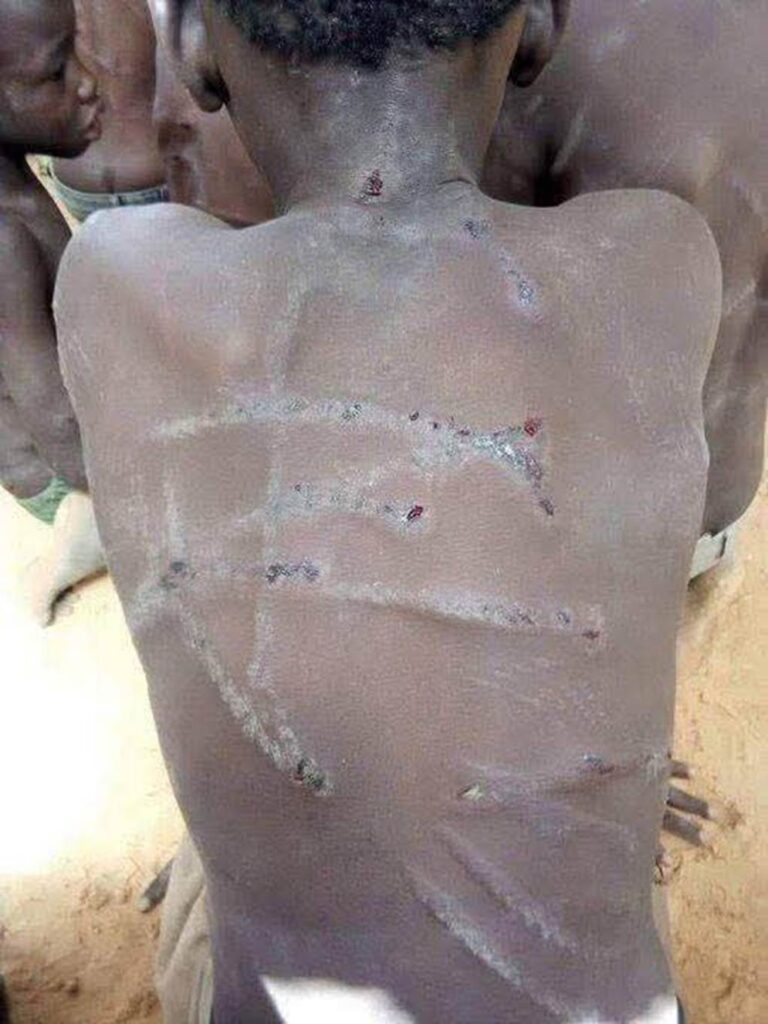
Armed kidnappers came down on the schools in those communities, in a coordinated raid, that left the entire southwest of Nigeria reeling. When things finally calmed down, more than 40 students and teachers had been dragged into the forest. Among the victims were primary school children, little toddlers barely old enough to know the alphabet, or even how to reason properly. Days after that videos of the captives surfaced online, showing them in plain visible distress recording desperate appeals for rescue. Then came the most dreadful report of all: a mathematics teacher, Michael Oyedokun, had been beheaded by his captors.
Fourteen days later, teachers marched through the streets of Ibadan, holding placards that said: “Bring Back Our Children. No More Bandits.” It was, in a lot of ways, a request Nigerians have been pushing for over a decade now, and still the response keeps refusing to come.
A Country That Has Normalised the Abnormal
To understand what happened in Ibadan’s hinterland in May 2026, you have to get inside how Nigeria arrived here, a place where the kidnapping of children from schools has turned into a grim and recurring headline instead of something national and urgent that actually stops the country cold in its tracks.
The architecture of this nightmare was built, not in one day but over years. It started for real in the northeast, where Boko Haram, whose name roughly means “Western education is forbidden” made schools a deliberate battleground for its ideological war. The group had been torching schools and killing teachers long before outsiders started paying attention. Then came the night of April 14, 2014 and the whole world could no longer pretend it hadn’t seen it.
April 2014
The Chibok Abduction
Boko Haram kidnaps 276 girls from Government Girls Secondary School in Chibok, Borno State, during exam preparations. It sparks a worldwide outcry. Twelve years later, 82 girls are still missing, period.
February 2018
Dapchi Girls
110 girls, abducted from Government Girls Science Technical College in Dapchi, Yobe State.
December 2020
Kankara Boys
More than 300 boys are abducted from Kankara Government Science Secondary School in Katsina State. Their release after a week leaves more questions than answers, about how government negotiations with bandits went.
November 2025
Kebbi and Niger State
25 schoolgirls kidnapped from Maga, Kebbi State. The school’s vice principal is killed. Then, three days later, 303 children and 12 teachers are abducted from St. Mary’s Catholic School in Niger State.
May 2026
Oriire, Oyo State
Armed bandits raid schools in Esiele and Yawota communities in Southwest Nigeria, long considered safer than the north. Over 40 students and teachers abducted. A teacher is beheaded.
What was once a northern crisis has now kind of quietly but definitely, spread like wide fire into a national one. The Oriire abductions are a watershed moment for real: for the first time in this decade-long horror story, the violence has arrived fully, unmistakably and brutally in the southwest, a place that had looked at the north’s suffering with sympathy, but maybe also with a small, misplaced sense of distance.
We have children as young as two and three years old in the bush. They are exposed to rain and harsh weather conditions. These victims are at risk, and nobody seems to know who could be next.
Rev. Bunmi Thomas, National President, Nigeria Teachers Congress, May 2026
The Geography of Fear: How the Southwest Lost Its Shield
For years, Nigerians in the southwest comforted themselves with a narrative: “this was a northern problem.” Boko Haram’s savagery, the cattle-grazing conflicts that later morphed into banditry, the unruled vastness of the northwest, these were calamities that felt geographically contained, even if they were morally intolerable.
That comfort began unravelling in 2025. In November of that year, the Aare Ona Kakanfo of Yorubaland, Gani Adams, issued a stark warning that terrorists and armed bandits had already infiltrated the forests across all six states of the southwest — Oyo, Osun, Ondo, Ogun, Ekiti, and Lagos. Southwest governors responded, setting up security arrangements agreeing on a digital intelligence-sharing platform and strengthening the Amotekun corps. Still, it wasn’t enough. Six months after Adams’ warning, children were being dragged into those same forests.
The bandits operating in these unruled forest corridors have changed a lot. They are no longer ideologues chasing some cause, they are now in a sense, entrepreneurs of terror. Kidnapping has become an industry, schools are soft targets, children are leverage and ransoms are revenue streams, not just chaos, like people say. The beheading of Michael Oyedokun wasn’t incidental cruelty, it was kind of, a market signal, a show of willingness to escalate and it was built to accelerate ransom discussions.
UN data confirms that students are increasingly abducted for ransom, forced marriage, trafficking and prisoner exchanges. Academic work points to poverty, unemployment and impunity as the primary drivers. When communities see bandits come back from the bush with cash and no consequences, the whole enterprise quietly expands.
For many kidnappers, one successful raid on a school can bring in more money than years of farming or informal work. So until the economic incentives are taken apart through credible prosecution, better governance and rural economic development, these raids will keep going.
What This Means for Children
Beyond the statistics there are children, there are names, there is a child somewhere in the forests of Oyo State tonight who went to school on May 15, thinking only about homework, no big plan. Research on abducted school children in Nigeria gives a consistent and devastating picture of what captivity does to young minds.
The immediate moment is terror: armed men, unfamiliar trees, hunger, exposure to the weather. But the psychological harm runs past the time they’re held. Studies record high rates of post-traumatic stress disorder, anxiety and depression among survivors. Children who return often can’t just slide back in, they meet stigma, learning interruption and sometimes outright social rejection. For girls, the damage is worse too, because the threat of sexual violence is real and then the social collapse that follows is immediate. Even children who are never abducted carry the wound. In regions hit by this, school attendance has declined in a sharp way, because fear replaces aspiration, sort of like nobody can plan ahead anymore. Parents in places like Esiele now face a choice that no parent in a working society should ever be asked to make: send your child to school and risk losing them to men with guns, or keep them home and see their future, slowly close, bit by bit.
Even after release, going back into school life is often hard, due to stigma, fear and also lessons that got interrupted. In affected regions, school enrolment and attendance have dropped sharply, with many parents pulling their children out especially girls, as a protective move.
Research on Nigeria’s Education Under Siege, 2025.
For girls, the math is even more cruel. In a country that already battles gender gaps in schooling, fear of kidnapping and forced marriage pushes families toward decisions that can permanently turn a girl’s life course. Nigeria’s north-eastern region already has some of the highest female illiteracy rates in the country, a direct legacy of Boko Haram attacking girl’s education. And that legacy is now moving south and west, quietly but steadily.
What This Means for Teachers
Michael Oyedokun taught mathematics. This is what we know about the man who was beheaded in the forests of Oyo State in May 2026. He was one of those overlooked millions who, despite low pay and limited resources, still choose to show up every day and invest in the next generation.
His murder sends a message that is not only personal, it’s systemic too. When a teacher can be abducted and then executed with what looks like impunity, the whole profession ends up being targeted. The Nigeria Union of Teachers put it this way: the development causes “severe psychological distress to families, the school community and the teaching profession.” It’s that careful, institutional kind of phrasing for something far more raw. Teachers across Oyo State and beyond are scared. They are now asking themselves if their loyalty to teaching, to their vocation can actually coexist with staying alive.
The Teachers Action Group’s march through Ibadan on May 29 felt like grief, as much as protest. Colleagues were there, demanding that the government treat their lives like they matter, like they should be defended. Between 2009 and 2022, estimates suggest 2,295 teachers were reportedly killed in attacks across Nigeria, and more than 19,000 were displaced. Oyedokun’s killing is not just one bad incident, it’s simply one line in a very long record of state failure.
The Teacher Exodus
Academic work has shown kidnapping and general insecurity have helped fuel a growing refusal among trained teachers to take up posts in rural areas, or in places considered high-risk. In northern Nigeria, some local governments have reportedly gone months without qualified teachers because of this. The south is starting to tip into the same downward spiral now. Security worries are steadily pushing the best qualified teachers toward urban centres, while leaving the most vulnerable communities exposed, unprotected.
What This Means for Communities
Esiele and Yawota are not just names. They are real places where people have built everyday lives. Places where farmers plant yam and cassava, where women run market stalls, where grandparents rock grandchildren on their knees. When children are kidnapped from these communities, it doesn’t just steal individuals: it steals the community’s own sense of itself as a place where ordinary life is possible.
Over the weeks since the abduction, parents have been sitting in their homes, watching the videos the bandits released online, forced to look on their children distress through a smartphone screen, and unable to help. It feels like intentional psychological warfare, you know. The bandits seem to know this, they understand that what parents endure is leverage and they weaponise that angle in a very methodical way.
In places where there have been repeated abductions, people talk about a slow unravelling of social trust. Night markets stop, at least the lively ones. Folks hesitate to gather. Families move to cities if they can manage the costs, leaving farms behind and their ancestral homes too, sometimes without much of a goodbye. Even social events get thinner. Schools, already under-resourced, lose the last of their students as communities empty out. So you end up with a kind of retreat in both space and numbers: entire communities gradually erasing themselves from the map, pressed hard by fear.
The abduction of the Chibok girls wasn’t really a one off tragedy, more like part of a longer string of mass abductions aimed at schools and surrounding communities. At least 1,400 students have been taken from schools since the Chibok abduction, ransom, forced marriage, trafficking and even prisoner exchange.
The Failure of Memory: Why It Keeps Happening
One of the most demoralising parts of Nigeria’s school kidnapping epidemic is how neatly it seems to stick to the same script: attack, outrage, demonstration, assurances from government, slow fade. The country has gone through this pattern so many times that the outrage, at some point starts to feel, almost like a ritual.
The Chibok girls were abducted on April 14, 2014. More than twelve years on, 82 of them are still unaccounted for. Leah Sharibu has been in captivity since 2018. The Oyo State government is now making assurances about the Oriire victims, while the government of Kebbi State did the same in November 2025. Niger State followed with similar assurances only days earlier. Every new abduction brings another round of pledges, protests, and—too often—later, an eventual quiet The structural failures enabling all of this are well documented, like they really already said it somewhere. Only 37 per cent of schools across ten Nigerian states have early warning systems in place, and even that feels thin. Security forces are under-resourced, and often just not there for rural communities. Prosecution rates for kidnapping are appallingly low, which builds up a culture of impunity that lets the whole industry flourish. The legal and judicial architecture needed to make kidnapping genuinely costly for perpetrators simply does not work, or at least not the way it should.
The Children the Nation Cannot Afford to Lose.
Nigeria has the largest population of out-of-school children in the world. By 2021, over one million children were afraid to go back to school, just because of conflict and insecurity. In 2020, around 11,500 schools were closed due to attacks. Those numbers are more than an education crisis; they are a civilizational one.
Education is the backbone of everything that comes after, a functioning economy, a stable democracy, a healthy society. Every child kept out of school by fear is a future doctor, engineer, teacher, journalist, or leader Nigeria will not have. Every teacher who resigns or relocates rather than face the danger of abduction is a hole in the human fabric of communities that really cannot afford it, not even a little.
Bandits moving through the forests of Oyo State almost certainly do not think in these terms. They think in ransoms. But the overall result of what they do — and of the state’s repeated inability to stop it — is the slow, grinding breaking-down of Nigeria’s human capital base, one school raid, at a time.
What Must Change
The protest that filled the streets of Ibadan on May 29 was peaceful, lawful, and necessary. It was also, in its own way, a sign of exhaustion—of a profession and a populace that have tried petitions, prayers, and patience, and are now reduced to walking through traffic with placards, pleading with government to feel urgency, about the lives of children.
What the Oriire abductions really require is not sentiment, it is a structural shift. Security personnel have to be stationed at schools in high-risk areas as an immediate priority, not something to hope for later. The regional Amotekun corps and the federal security set-up must build real intelligence sharing, and faster reaction ability in forest corridors across the southwest. Communities also need to be provided with early warning tools. And critically, the cycle of impunity must be interrupted: those who plan school kidnappings should meet serious legal outcomes.
Beyond security, the money roots that feed banditry must be tackled. Rural poverty, youth joblessness, and ungoverned spaces do not excuse the brutality of those who decide to kidnap children, but they do help explain the easy soil where that decision grows. Investment in rural development is not soft idealism, it is a practical security tactic for the children still out there in the forests of Oyo State, as this article drops, the toddlers exposed to rain and that heavy darkness, the teenagers holding onto each other in fear, the teachers standing there thinking if this is it, if this is how their service to their country ends. Policy frameworks and reform agendas? those are just abstractions, like distant stuff. What they need right now is to come back home. They needed to come home yesterday.
— ✦ —
This piece is dedicated to Michael Oyedokun and to all the teachers and students who have paid the highest price for simply showing up. May their names be remembered. May the children come back home.
By:
Praise Ifeoluwa Oloidi