
A great deal has been said about education and the civilisation it fosters. Its relevance has prompted many international organisations, such as the United Nations (UN), to advocate for an inclusive environment where barriers to education are removed and marginalised children are given the same equal entitlement to learn as their peers. Consequently, every well-meaning nation should engage in the journey of promoting inclusive and equitable quality education and lifelong opportunities for everyone, as outlined in the UN Sustainable Development Goal (SDG) 4. Notwithstanding, while actively pursuing this great fate, students’ mental health should not be overlooked.
However, the typical African educational system is divided into three levels: primary, secondary, and tertiary, each of which presents specific stressors that can have a significant impact on student mental health and, as a result, academic performance. Other stressors have been identified as limited facilities, great academic demands, and overcrowded classrooms. These systemic issues increase the global rise in mental health conditions such as depression and anxiety, which have a substantial influence on students’ quality of life, academic productivity, and long-term well-being. Such circumstances frequently inhibit efficient learning, since students experiencing psychological discomfort may display decreased concentration, memory, and academic engagement.
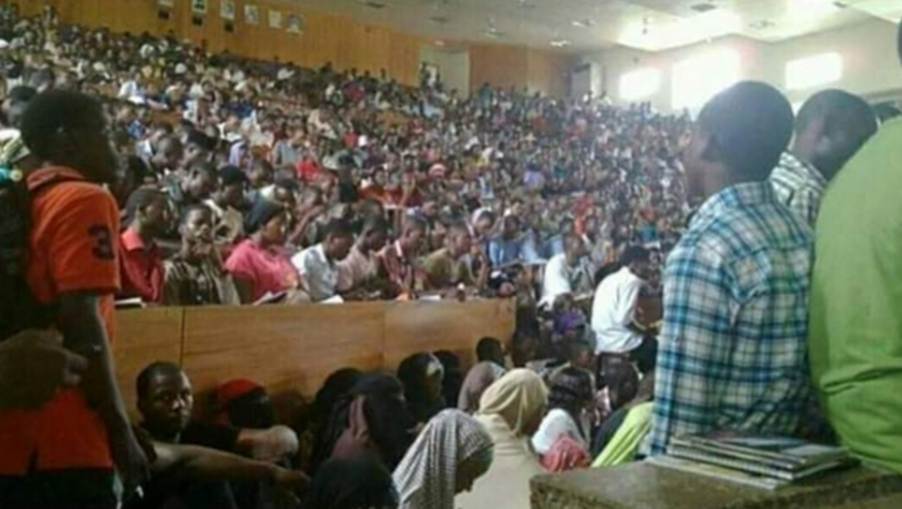
This affirms the discourse that a comprehensive understanding of student performance requires appreciating the relationship between mental health and academic achievement, as well as recognising that psychological discomfort can considerably impair learning.
Therefore, the educational system in Africa requires a more balanced, humane, and supportive framework. This entails that we must, as a matter of fact, transition from grade-centred learning to value-centred education. A whole lot must be done to redefining success to include creativity, emotional intelligence, communication skills, resilience, and ethics, training teachers to support mental wellness alongside academic performance, incorporating counselling and mentorship into every school’s structure, not as an afterthought but as a core service, encouraging parents to listen, not just demand, to understand their children’s learning styles, struggles, and strengths, and using assessments that go beyond.
In light of this, much has been said about the increasingly alarming number of graduates who are unprepared for the demands of the modern workforce as a result of a dysfunctional educational system. This highlights the critical need for comprehensive treatments that not only address systemic educational deficits but also prioritise students’ mental health to build a more conducive learning environment. In a nutshell, effective interventions must include both mental health assistance and academic scaffolding to create an atmosphere in which students cannot just manage with pressures but also excel academically. This involves improving mental health services through accessible counselling, proactive therapy, and incorporating stress-coping skills into academic programs to boost engagement and emotional wellness.

Above all, it is important to point out that graduates’ lack of industrial readiness is a widespread issue caused by a significant discrepancy between university curricula and the changing demands of the professional world, leaving many graduates unprepared for modern, technology-driven workplaces. This imbalance frequently leads to graduates who lack competency in essential soft skills such as creativity and problem-solving, as well as a limited understanding of emerging technologies. Africa’s educational frameworks sometimes prioritise an organised, memory-based curriculum over one that promotes critical thinking and practical application, limiting students’ ability to innovate in the workplace.
This problem is worsened by the quick pace of technological change, which educational institutions frequently struggle to integrate into their curricula, resulting in a continual gap between academic preparation and industry requirements. Indeed, the global economy’s expanding competitiveness required a more trained and adaptive workforce, but a sizable minority of recent graduates, particularly in Africa, are unprepared to fulfil these rising expectations. This frequently results in structural unemployment, in which a surplus of graduates coexists with a shortage of qualified candidates for open posts, worsening economic stagnation.
However, this situation is frequently the result of structural indolence within educational institutions, particularly in areas where academic systems are hesitant to incorporate industrial feedback into curriculum development. For example, studies consistently show that common employer complaints centre on new graduates’ deficiencies in critical decision-making, problem-solving, teamwork, and self-learning skills, highlighting a critical disconnect in which theoretical knowledge is imparted without sufficient emphasis on practical application.
As a result, many graduates lack both the technical abilities and professional qualities essential for direct entry into the workforce, highlighting a systemic failure of academic preparation. In summary, institutions of learning in Africa must rethink their instructional approaches and curricular frameworks to better fit with labour market expectations, ensuring that graduates have both technical competencies and soft skills required for successful career integration.