
Nigeria has celebrated the increasing number of girls in school. But what happens when that girl is bullied, mentally exhausted, menstruating, and sitting in a classroom that was never built for her?
Across the country, we see progress reports and policy updates showing that more girls are enrolling in school. This is worth celebrating. However, behind those numbers lies a truth that many prefer not to see. Thousands of Nigerian girls attend school every day but remain unseen. They are present physically but invisible emotionally. They appear fine, yet they carry silent battles that affect their learning and their well-being.
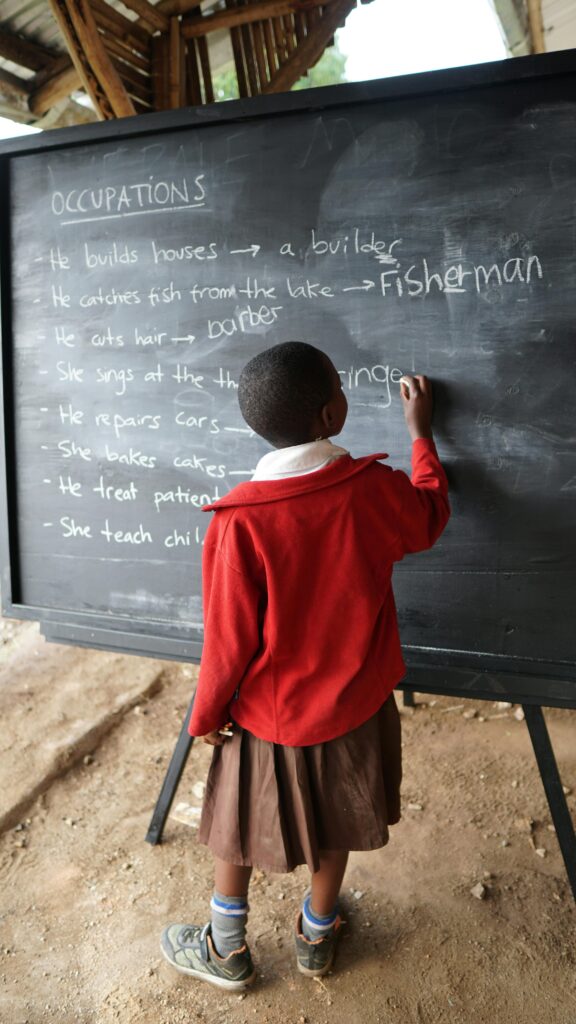
The Hidden Struggles Within the Classroom
In several Nigerian schools, girls face a combination of academic pressure, social expectations, and emotional neglect.
They are expected to perform well, behave appropriately, and stay strong, even when the environment around them is unsupportive.
Many young girls endure menstrual pain without access to proper hygiene materials or private facilities. Some face bullying and verbal abuse simply because of their gender. Others sit through lessons while battling anxiety, sadness, or fear.
When a young girl spends more energy trying to survive school than to learn in school, we have failed her.
According to UNICEF, nearly one in six Nigerian adolescents experience emotional distress, yet very few receive any psychological help. Most schools lack counsellors or mental health programs. As a result, many children are growing up with damaged confidence hidden behind good grades.
Policies Exist, but Implementation Is Weak
Nigeria has made efforts to address these issues. The government recently validated the National Policy on Menstrual Health and Hygiene Management. Some state assemblies have also called for the inclusion of mental health education in schools.
However, these policies often stop at the level of announcement. Implementation remains a challenge. A girl in a rural community may never feel the impact of these policies. She still struggles with poor facilities, stigma, and misinformation about her body and her emotions.
Until mental health and gender inclusion become part of daily school life, these policies will not create real change.
Why Mental Health Must Be a Priority
When a child’s mind is burdened, learning becomes almost impossible. Mental health is not a luxury; it is the foundation of every child’s growth.
Imagine how different schools would be if teachers received basic training on emotional awareness. Imagine every school having at least one counsellor or social worker. Imagine girls having safe spaces where they could talk freely about what they feel, without shame or fear.
Education is more than passing exams. It is about confidence, curiosity, and emotional stability. A healthy mind produces a healthy learner.
What Dear Children’s Foundation Is Doing
At the Dear Children’s Foundation, we believe that every child deserves more than just a seat in a classroom. Every child deserves to be seen, supported, and empowered.
To achieve this, we are working to:
- Introduce gender-sensitive mental health workshops in schools.
- Create mentorship programmes that connect young girls with inspiring female role models.
- Establish safe spaces in schools where children can express themselves freely.
- Organize training sessions for parents, teachers, and communities on children’s rights and emotional well-being.
Our goal is to build schools that do not only teach but also care.
A Call to Nigeria’s Conscience
It is time to move beyond counting how many girls are enrolled in school. We must start asking how many feel safe and supported while they are there.
It is not enough to open classrooms if the minds inside them remain closed by fear and pain.
A girl who hides her struggles behind her uniform is not being educated. She is simply being ignored.
Let us create schools where every girl can learn freely, think confidently, and grow with dignity.
Let us build a nation where education is not only about teaching children to read and write but also about helping them feel seen, heard, and valued.